Spectating


How to support an ultramarathon runner: crew, aid stations and photos
Learn how to support an ultramarathon runner: what a crew does, how to plan aid station stops, what to pack and how to keep the long day as one story.
To support an ultramarathon runner, plan around aid stations, not mile markers. Pack for a very long day, keep your runner fed and warm, and save the photos as you go. An ultra can last from a few hours to more than a day, so the cheering is slower and the waiting is longer than at a road marathon.
Here is how a friend or family member can be a real help on the day.
What is an ultramarathon, and what does a crew do?#
An ultramarathon is any foot race longer than the 42.195 km of a marathon. Many are run on trails, in the hills, with long gaps between places where anyone can reach the runner.
A crew is the small team that meets the runner at those places. A crew member can hand over food, refill bottles, swap shoes or socks and, above all, say a calm word at a bad moment. Some races also allow a pacer, who runs the last part alongside the runner. Rules differ for every race, so read the runner's race guide first. Some races limit crew to certain aid stations, and some do not allow crew at all.
How do you support an ultramarathon runner around aid stations?#
Ask your runner for three things the week before:
- The aid station list, with the distance to each one.
- A target time at each one, a best guess and a slow guess.
- What they want at each stop, such as soup, a dry shirt or a fresh headlamp.
Then work out the drive, because it is the hardest part when you support an ultramarathon. Trail aid stations are often down long dirt roads, so a stop can take far more time than the map suggests. Add a margin, and set off early. A runner who arrives to an empty spot will feel it, so it is better to wait an hour than to miss them.
Phone signal in the hills is often poor. So agree a plan in advance for what to do if you cannot reach each other.
What should the crew pack to support an ultramarathon runner?#
- Food the runner already likes, since a long race is no time to try something new.
- Spare socks, shoes, a shirt and a warm layer, because weather in the hills can change fast.
- Headlamps and fresh batteries, for a race that runs into the night.
- A chair, water and a snack for you, because you will wait a long time.
- A power bank, so your phone can still take the photos and show the tracking page.
See the spectator packing list for the basics, then add the night gear on top.
How can you cheer when the runner is tired?#
Keep it short and kind, since the best way to support an ultramarathon runner late in the race is calm. After many hours, a runner has little energy to talk. So say their name, smile, ask what they need and let them go. Do not tell them how far they have left unless they ask. How to cheer for a runner has more on what to say and what to skip.
If a runner wants to stop, listen first. Then check the basics: have they eaten, drunk and kept warm? Often a meal and five minutes fix more than a pep talk. If they are hurt or unwell, though, their health comes before the finish, and the medical team at the aid station can help.
How do you follow an ultra and keep the photos?#
Most big races offer live tracking, but it can lag in remote areas. See how to track a runner on race day for what to expect.
Photos matter more in an ultra than almost anywhere, because the day is so long that no one remembers it in order. Take a picture at each aid station, with the time, the face and the food. Ask other crew and friends to add theirs. Then put them all in one place with the route. What to do with race day photos has the steps.
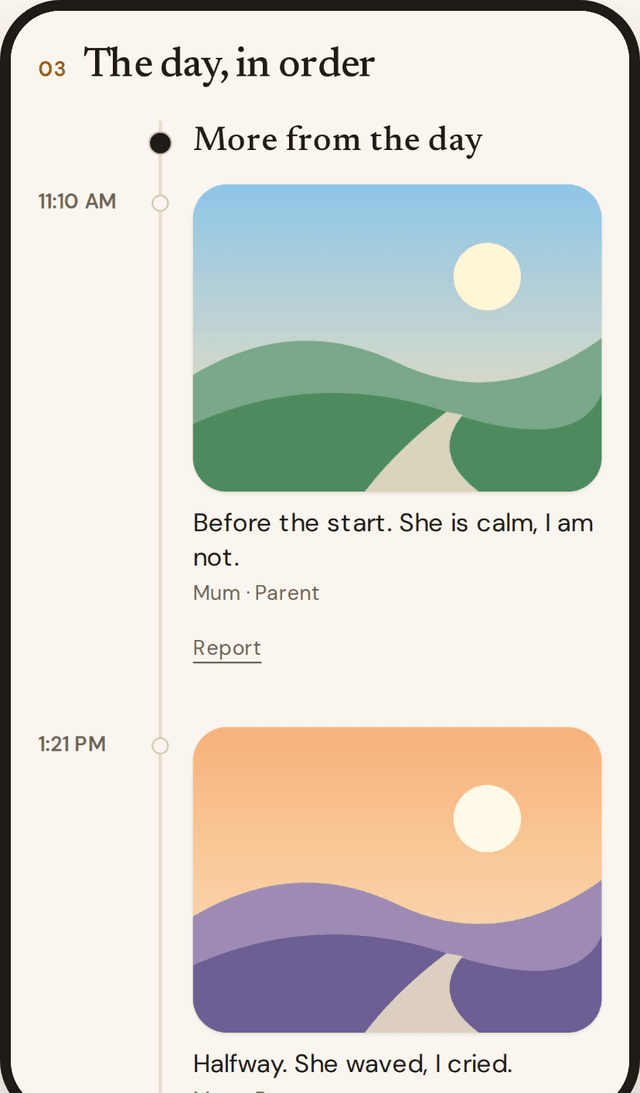
To support an ultramarathon well, keep the memory too. A race story turns scattered pictures into one timeline with the runner's result. For an ultra, that timeline is the whole day laid out from the first light to the last.
Frequently asked questions#
Can anyone crew to support an ultramarathon runner?#
In most races, yes, but each race sets its own rules. Some limit where crew can go or how many people may help, so check the race guide.
Crew or pacer: who helps most to support an ultramarathon?#
A crew meets the runner at aid stations and helps with food and gear. A pacer runs with them for a section, usually late in the race, to keep them company and on track. Not every race allows pacers.
How long should I plan to wait at an aid station?#
Plan on a long wait. Arrive well before your runner's slow estimate, because delays in the hills are common and a missed stop is hard to fix.
How do I share the photos from an ultra with family?#
Send one link to family and friends, and let them add photos, clips and cheers with no app and no account. RaceTale then places everything on a timeline next to the runner's route and result.